
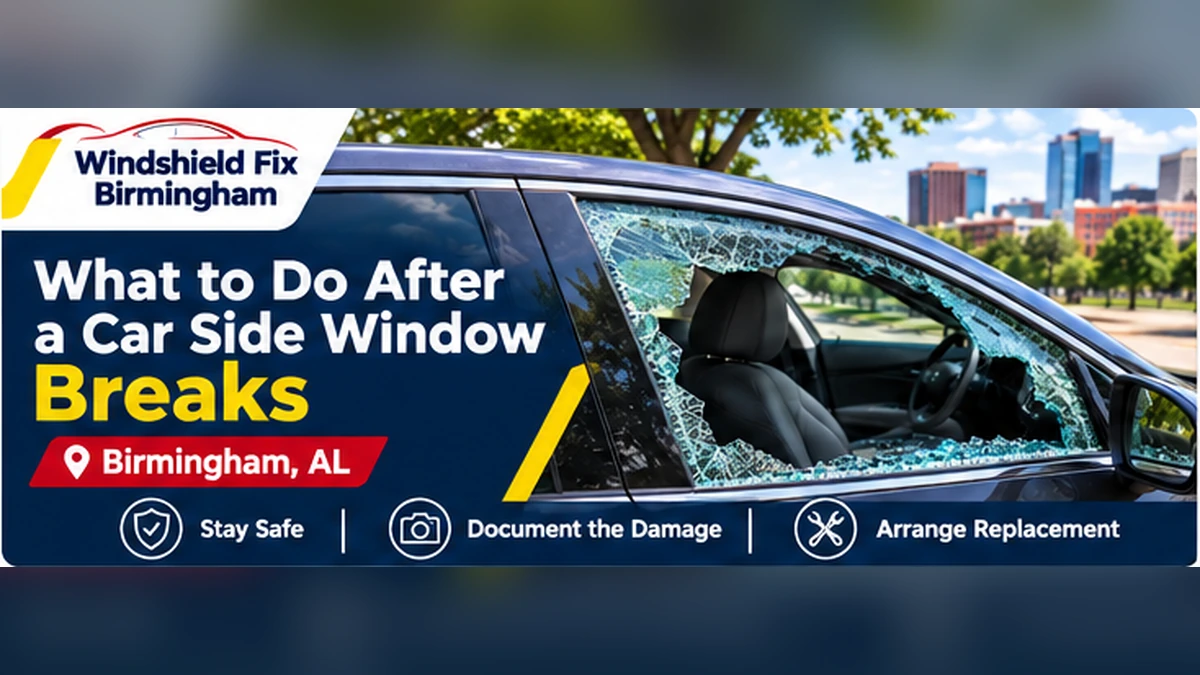
A side window can break without warning. Before arranging replacement, focus on personal safety, documenting the damage and protecting the parked vehicle from further exposure.
A broken car side window can leave sharp glass around the door, seats and vehicle interior. It can also expose the cabin to rain, dust and unauthorized access. Whether the damage happened during a break-in, an impact or another incident, take a few careful steps before arranging car window replacement in Birmingham, Alabama.
This guide explains what to do after a car side window breaks, what information to record, when to contact your insurer and what to ask an auto glass provider. It is an informational guide—not a vehicle-specific safety inspection, insurance decision or promise of service availability.
What Should You Do Immediately After a Car Side Window Breaks?
Start outside the vehicle and check the situation before touching the glass or opening the affected door. If anyone is injured, there is an immediate threat or a crime is still in progress, move to a safe place and contact emergency services.
1. Keep People Away from the Broken Window
Loose fragments may be sitting on the window sill, door trim, seat, floor or inside the door. Other pieces may still be attached to the frame. Keep passengers, children and pets away from the damaged side of the vehicle. Do not reach through the opening or brush glass away with your bare hands.
2. Consider Whether Police or Your Insurer Should Be Contacted First
If the damage appears connected to theft, vandalism or another crime, follow the local law-enforcement reporting process. For an emergency, injury or crime in progress, contact 911. For a non-emergency incident, use the appropriate local reporting channel.
When you may make an insurance claim, check with your insurer before disturbing possible evidence or beginning cleanup. Requirements vary by insurer and incident. Ask whether a police report, incident number, photographs or an estimate is needed.
3. Photograph the Vehicle and the Damage
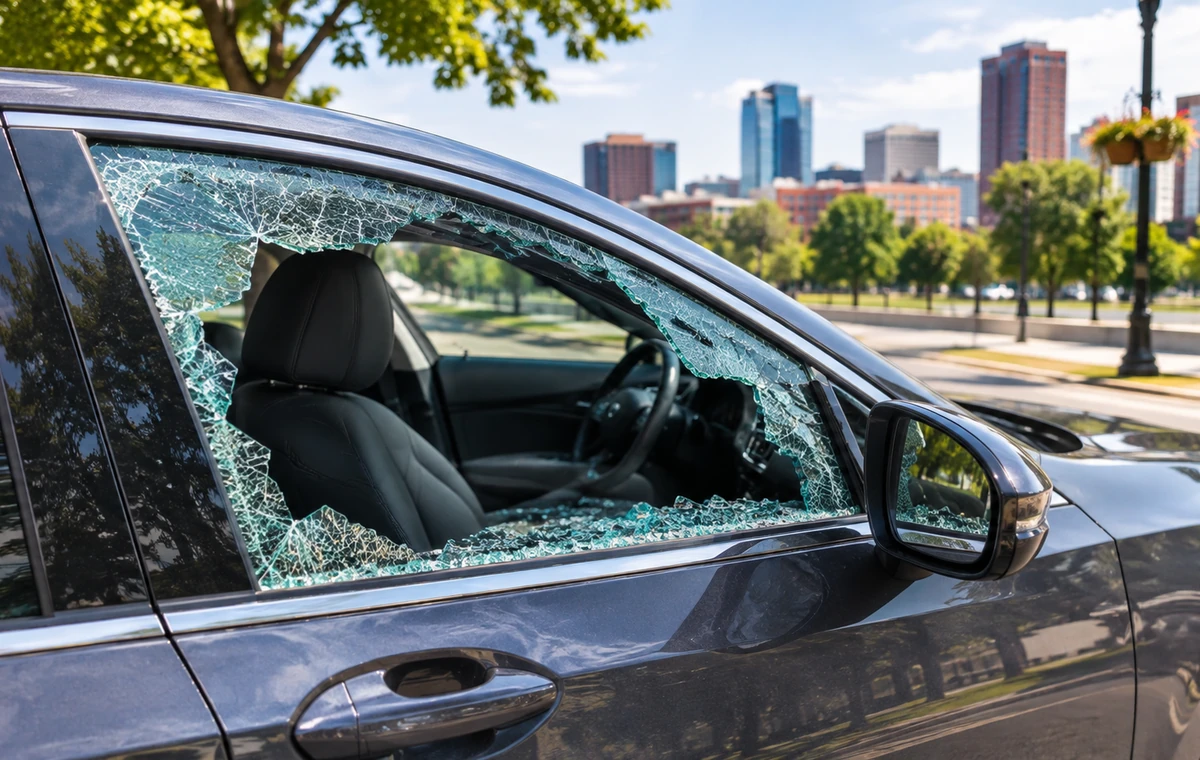
When it is safe, take a wide photograph showing the vehicle and close photographs of the broken window, surrounding trim and visible damage. Photograph the interior from a safe position without reaching through loose glass. If belongings are missing, make a separate record for the police or insurer.
4. Avoid Pulling Out Glass or Taking the Door Apart
Do not pull at glass that is still attached to the window frame, reach inside the door to retrieve fragments or remove the interior door panel yourself. A power-window mechanism, wiring, clips or other components may be behind the panel. Avoid operating the window switch when broken glass may be inside the door.
Ask the auto glass provider whether the inspection or estimate includes checking the door area and explaining how visible glass fragments will be handled. Do not assume cleanup, regulator work or other mechanical repairs are automatically included in a glass replacement quote.
5. Protect the Parked Vehicle from Weather and Further Exposure
When practical, move the vehicle to a secure, covered location only if it can be moved safely. A temporary cover may help protect a parked vehicle from rain and debris while you arrange an assessment. Use a covering only when it can be secured without contacting sharp edges or damaging the vehicle finish.
A temporary cover is not a replacement for glass and does not make a vehicle roadworthy. Do not drive with plastic, cardboard or another covering that blocks visibility, interferes with mirrors or creates a loose-material hazard.
Broken fragments can remain in places that are difficult to see, including door cavities and seat tracks. If there is extensive glass, sharp material or uncertainty about safe access, leave cleanup to a qualified professional.
Can You Drive with a Broken Car Side Window?
There is no single answer that applies to every vehicle or every type of damage. A missing side window may affect visibility, expose occupants to glass or weather, or leave loose fragments that can move while the vehicle is in motion.
Do not drive if any of the following conditions apply:
- Loose glass remains attached to the frame or could fall into the cabin.
- Glass fragments are moving around the seats, controls or driver area.
- The damage affects the driver’s view, side mirror use or ability to operate the vehicle normally.
- The door, latch, window opening or nearby bodywork appears damaged.
- A temporary covering could come loose, block visibility or distract the driver.
- You are unsure whether the vehicle can be moved safely.
If you cannot establish that the vehicle is safe to move, keep it parked and ask the appropriate roadside or vehicle-recovery provider about your options. Do not risk driving simply to reach a glass shop.
Which Car Window Is Broken?
When requesting an estimate, identify the exact glass panel. “Side window” can refer to more than one position, and some fixed glass panels are different from door glass that moves up and down.
If you are not sure which panel is damaged, describe its position and share a photograph taken from a safe distance. Avoid guessing the part name when asking for an estimate.

Does Insurance Cover a Broken Car Window?
Coverage depends on the policy, the cause of the damage, the deductible and the insurer’s claim process. Do not assume that every broken side window is covered or that the replacement will have no out-of-pocket cost.
Contact your insurance company and ask:
- Does my policy cover this type of side-window damage?
- Which deductible applies, if any?
- Do I need a police report or incident number?
- Should I obtain approval before arranging replacement?
- Do you need photographs, an estimate or other documents?
- Can I choose the auto glass provider, and how is payment handled?
Keep your photographs, incident details and any claim reference together. Ask the insurer to explain the process for your policy rather than relying on a general online statement about glass coverage.
What Information Should You Give an Auto Glass Provider?
Clear information can help the provider identify the correct glass and determine what needs to be inspected. Before making an enquiry in Birmingham, AL, prepare the following details:
What Should You Ask Before Approving Car Window Replacement?
Before authorizing work, ask for a clear explanation of the proposed glass and what the estimate includes. The exact requirements depend on the vehicle and the damaged panel.
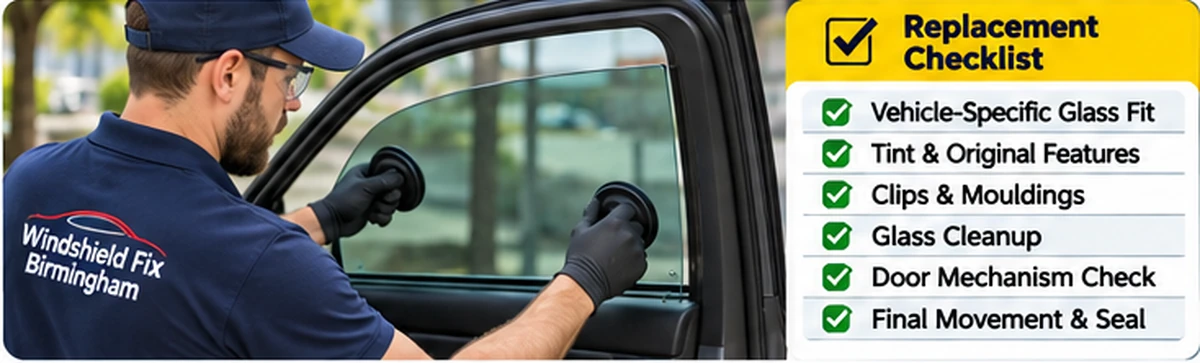
- Does the replacement glass match the vehicle and the exact window position?
- Are tint, shade, markings or other original glass features being matched where applicable?
- Does the quote include installation materials, clips, mouldings and labor?
- Is removal of visible broken glass from the affected area included?
- Will the window regulator, track or related mechanism be inspected if it may have been affected?
- Will the window be checked for proper movement, fit and sealing after installation?
- Are taxes, mobile or travel charges, and any additional work listed separately?
The Auto Glass Safety Council explains that windshield and side-window glass form part of a vehicle’s passenger restraint system and that proper installation matters. Ask how the replacement process and parts will be matched to the vehicle. Read the AGSC guidance on proper auto glass replacement.
Frequently Asked Questions
What should I do first after my car side window breaks?
Keep people away from the broken glass, move to a safe place and assess whether emergency or police assistance is needed. Photograph the damage when safe, contact your insurer if you may make a claim, and arrange a professional assessment.
Can I drive with a shattered passenger-side window?
It depends on the damage and whether the vehicle can be operated safely. Do not drive if loose glass, visibility, mirror use, door damage or a temporary covering creates a hazard. If you are uncertain, leave the vehicle parked and seek guidance.
Should I clean broken window glass out of the door myself?
Avoid reaching into the door cavity, removing the door panel or pulling at glass in the frame. Fragments may be hidden behind trim or near moving parts. Ask the provider what inspection and cleanup work is included.
Can I temporarily cover a broken car window?
A temporary cover may help protect a parked vehicle from weather and exposure while you arrange an assessment. It is not a repair and should never be used while driving if it blocks visibility, affects mirrors or could come loose.
Does car insurance cover a broken side window?
Coverage depends on your policy, the cause of the damage, deductible and insurer requirements. Contact your insurer to confirm coverage, reporting requirements and whether approval is needed before replacement.
What details are needed for a car window replacement estimate?
Provide the vehicle year, make and model, exact window position, a description of the damage, your location and photographs if available. A provider may request the VIN to confirm the correct glass.
Is side window replacement the same as windshield replacement?
No. Side door glass, fixed quarter glass and the front windshield are different vehicle-glass components. They can use different glass specifications, mounting methods and installation procedures.
Can a side window be repaired instead of replaced?
It depends on the glass type, damage and vehicle design. A window that is shattered, missing or no longer securely fitted may require replacement. An auto glass professional should assess the specific panel.
Need Information About Car Window Replacement in Birmingham, AL?
Identify the affected window, gather your vehicle details and ask about compatible glass, estimate inclusions and appointment arrangements. Service coverage and availability must be confirmed for your location and vehicle.
Any estimate, service availability, mobile option or repair recommendation should be confirmed directly for the specific vehicle and location.- AAA — What to Do When You Have a Broken Car Window
- Auto Glass Safety Council — Proper Auto Glass Replacement
- Auto Glass Safety Council — Learn the Automotive Glass Replacement Safety Standard
This article provides general educational information and is not a substitute for emergency assistance, a vehicle-specific safety inspection, legal advice or an insurance coverage decision. Follow local law-enforcement and insurer instructions when applicable. Keep away from sharp or unstable glass and have the vehicle assessed by a qualified auto glass professional.