

A practical way to judge whether a rock chip is likely to be repairable, based on its type, size, location, depth and age, before you speak with an auto glass technician.
Many rock chips can be repaired, but not all of them. Whether yours qualifies depends on five things: the type of break, its size, where it sits on the windshield, how deep it goes and how long dirt and moisture have had to get into it.
If you have typed “can a rock chip in windshield be repaired” into a search bar after hearing that sharp crack on the highway, this guide walks through the same factors an auto glass technician weighs. It will not replace an inspection, but it will help you understand what you are looking at and why a shop may recommend repair for one chip and replacement for another.
A rock chip is usually a good repair candidate when it is roughly the size of a quarter or smaller, sits outside the driver’s direct line of sight, is limited to the outer layer of glass, has no long cracks running from it and is not packed with dirt. Damage on the inner layer, at the edge or in front of a windshield camera often points toward replacement.
Can a Rock Chip in Windshield Be Repaired? The 5 Checks That Decide
The industry repair standard in the U.S. is the Repair of Laminated Automotive Glass Standard (ROLAGS), which sets out what damage can be repaired and how. Vehicle manufacturers may add stricter rules of their own. Most repair decisions come down to the checks below.
1. What Type of Break Is It?
Technicians describe windshield damage by its shape. Knowing the names makes it easier to describe your chip over the phone.
- Bullseye: a round, dark circle with an impact point in the center.
- Half moon: a partial bullseye, often from a glancing hit.
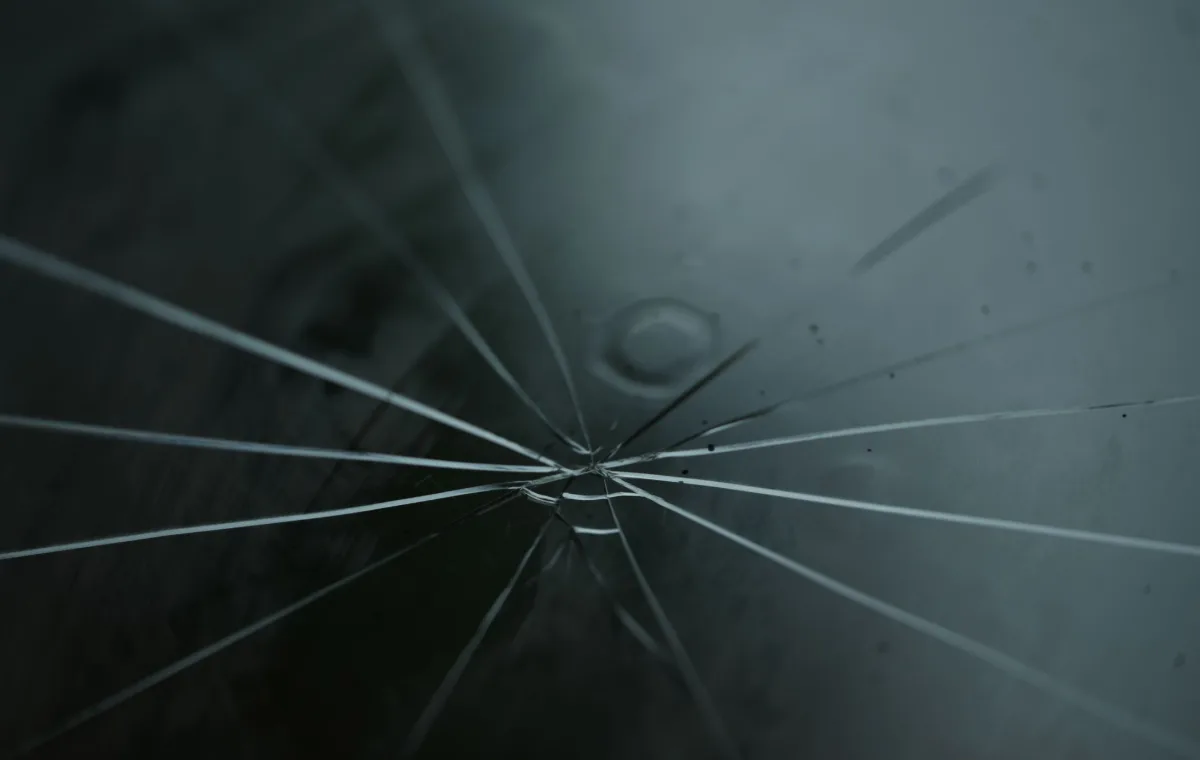
- Star break: short cracks, or “legs,” radiating out from the impact point.
- Combination break: a bullseye with star-like legs around it.
- Surface pit: a small spot where a tiny piece of glass is missing.
Clean, contained breaks such as a small bullseye tend to be the easiest to repair. Star breaks and combination breaks can often be repaired too, but their legs can lengthen with heat, cold and road vibration, so timing matters more.
2. How Big Is the Chip?
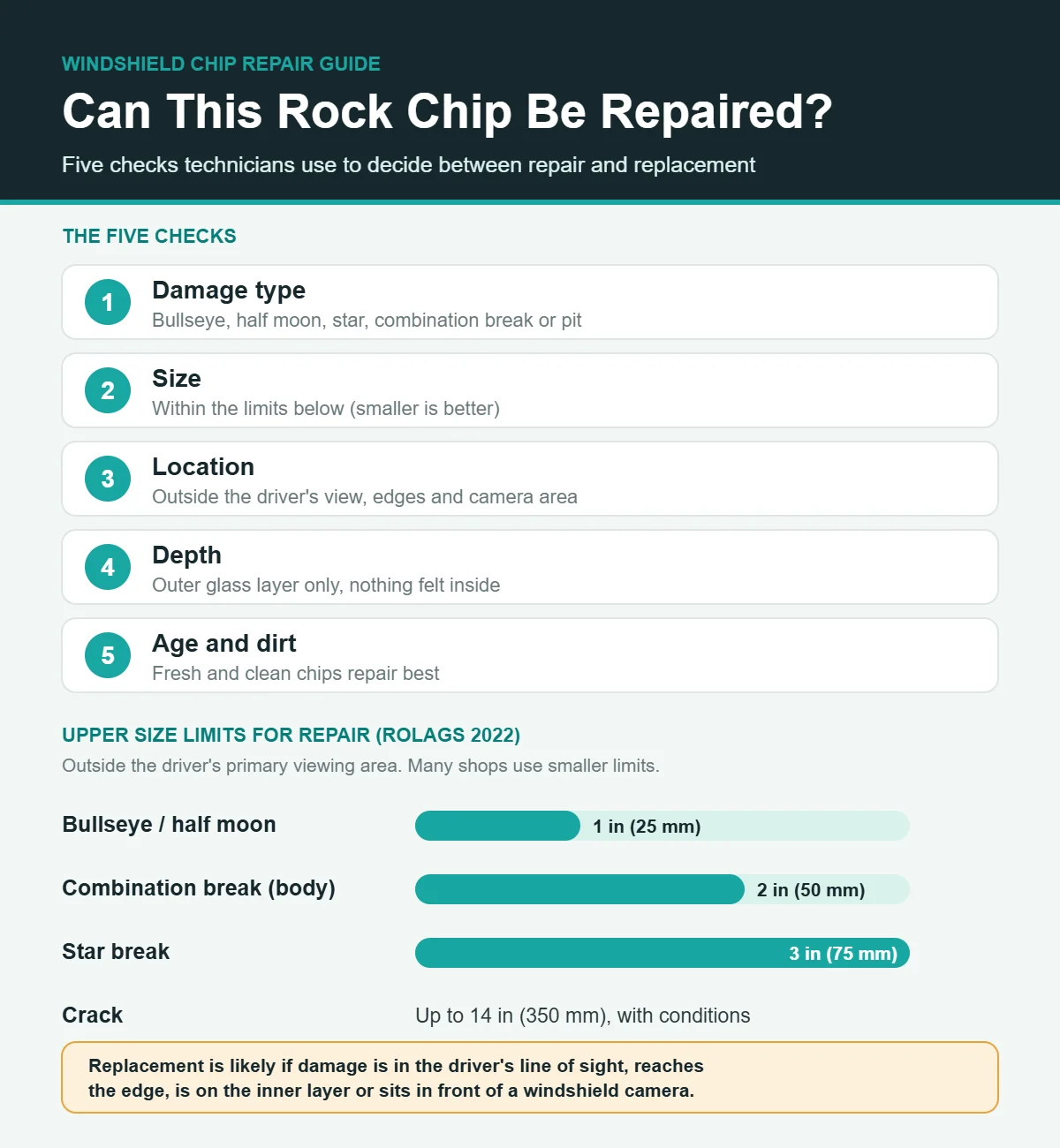
Size is the check most drivers think of first. The current version of ROLAGS sets the following upper limits for repairable damage outside the driver’s primary viewing area.
| Damage Type | Upper Size Limit for Repair | Everyday Comparison |
|---|---|---|
| Bullseye or half moon | 1 inch (25 mm) diameter | About the size of a quarter |
| Combination break | 2 inches (50 mm) body, not counting legs | Roughly the short side of a credit card |
| Star break | 3 inches (75 mm) diameter | A little less than the long side of a credit card |
| Crack | 14 inches (350 mm) long, with conditions | Many shops set a much shorter limit |
These are the maximums in the industry standard, not a promise that any shop will repair damage of that size. Many auto glass providers use more conservative limits, and the vehicle manufacturer’s guidance takes priority.
3. Where Is It on the Windshield?
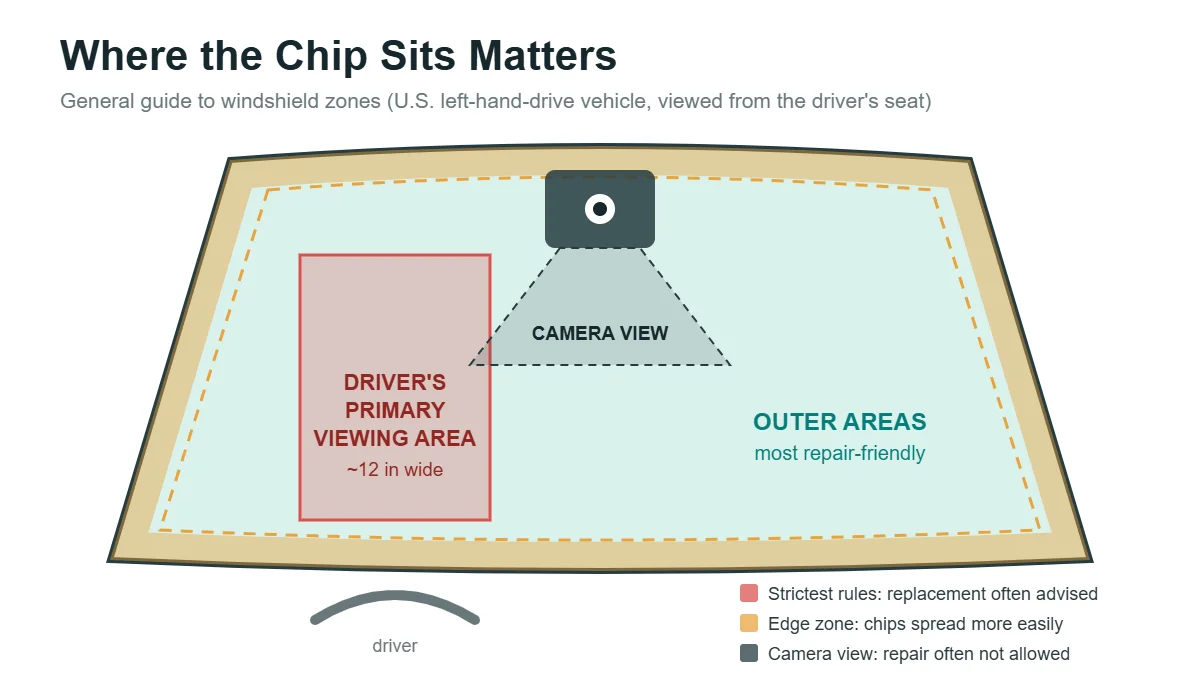
Location can rule out a repair even when the chip is small. Three areas get special attention:
- The driver’s primary viewing area: ROLAGS defines this as a strip about 12 inches wide, centered on the driver, from the top to the bottom of the wiper sweep. A repair can leave slight distortion, so the standard is much stricter here, and many shops will recommend replacement instead.
- The edges: cracks that reach the edge of the glass are generally treated as replacement cases, and chips near the edge are more likely to spread.
- In front of a camera or sensor: many newer vehicles have a forward-facing camera behind the windshield for driver-assistance features. Damage in that camera’s field of view often cannot be repaired because the repair itself could affect what the camera sees.
4. How Deep Does the Damage Go?
A windshield is laminated: two layers of glass bonded to a plastic interlayer. Resin repair is meant for damage in the outer layer. ROLAGS lists damage on the inside layer, damage that passes through both layers and damage or discoloration of the plastic interlayer as conditions that should not be repaired. A useful test is to run a fingertip gently over the inside of the glass behind the chip. If you can feel damage on the inside, mention it when you call.
5. How Old and Dirty Is the Chip?
The longer a chip stays open, the more dirt, washer fluid and moisture can work into it. Contamination that cannot be cleaned out is another condition on the standard’s do-not-repair list, and trapped grime can leave a cloudier finished result. Covering the chip with clear tape until it is inspected, and getting it looked at promptly, keeps your options open.
Signs a Rock Chip Probably Can’t Be Repaired
If any of these apply, expect a technician to discuss replacement rather than repair:
If replacement is recommended, our guide to windshield repair vs. replacement explains what to ask about glass type, camera calibration and safe drive-away times.
Windshield Chip vs. Crack: Why the Difference Matters
A chip is damage around a single impact point. A crack is a line running through the glass, either spreading from a chip or appearing on its own from stress. Chips are far more often repairable. Once a chip turns into a crack, the length, location and whether it reaches the edge all become part of the decision, and many shops will only repair short cracks. That is the main reason auto glass technicians encourage getting a chip assessed early rather than waiting to see what happens.
Hot afternoons, cool nights and blasting the defroster or air conditioning straight onto the glass can all stress a fresh chip. Until it is inspected, use moderate cabin temperatures and avoid aiming vents at the damaged area.
Can You Fix a Rock Chip in Your Windshield Yourself?
Consumer repair kits are widely sold, and they use the same basic idea as a professional repair: resin is pushed into the break, then cured to restore clarity and help stop it spreading. They can work on a small, clean, simple chip. The risks are trapping dirt or air in the break, not filling all of the legs, or adding enough pressure to make a crack run. A poor DIY attempt can also make a later professional repair harder.
If the chip is in your line of sight, near the edge, close to a camera or larger than a quarter, leave it to a professional. If you are unsure what happened at the moment of impact, our guide on what to do after a rock hits your windshield covers the first steps.
What to Expect From a Professional Chip Repair
- Inspection: the technician checks the damage from inside and outside the vehicle, and confirms whether it can be repaired.
- Cleaning: loose glass and debris are removed from the impact point.
- Resin injection: a specialized resin is drawn into the break, often using vacuum and pressure cycles.
- Curing and finishing: the resin is cured, usually with ultraviolet light, then excess resin is removed and the surface is polished.
A repaired chip usually becomes much less noticeable, but a faint mark can remain. The main goals are to restore strength and stop the damage from spreading. Many chip repairs take less than an hour, though the provider should confirm timing for your vehicle. If you are wondering about cost and coverage, read whether car insurance covers windshield damage in Alabama and confirm the details with your insurer.
Frequently Asked Questions
Can a windshield chip be repaired?
Often, yes. A chip that is small, outside the driver’s line of sight, limited to the outer layer and reasonably clean is usually a good repair candidate. A technician must inspect it to confirm.
What size windshield chip can be repaired?
Under the ROLAGS industry standard, bullseye and half-moon damage can be repaired up to 1 inch across, combination breaks up to 2 inches and star breaks up to 3 inches, outside the driver’s primary viewing area. Many shops use smaller limits.
Can a rock chip be too small to repair?
Some very small surface pits may not need resin repair at all, while others are filled to improve appearance. Even a tiny chip is worth showing to a technician if it sits in your line of sight or near the edge.
Can a chip in the driver’s line of sight be repaired?
The standard is much stricter in the driver’s primary viewing area because a repair can leave slight distortion. Larger chips there are not repaired, and many providers recommend replacement for any damage directly in front of the driver.
Will a repaired chip disappear completely?
Usually not completely. A good repair makes the damage much less visible and helps stop it spreading, but a small blemish may still be seen up close.
How long should I wait before getting a chip repaired?
There is no safe waiting period. The sooner the chip is assessed, the less time dirt and moisture have to get into it and the lower the chance it spreads into a crack.
Is windshield chip repair worth it?
When the chip qualifies, repair is generally quicker than replacement, keeps the original glass and its factory seal in place, and can stop the damage from growing. If the chip does not qualify, replacement is the safer choice.
Not Sure If Your Rock Chip Can Be Repaired?
A chip that looks minor can still sit in the wrong place, and a chip that looks alarming may still be repairable. Have it assessed so you know which option fits your vehicle.
Learn more about windshield chip and crack repair in Birmingham, AL and confirm service availability for your vehicle.
Repair suitability, service availability and any quote should be confirmed for the specific vehicle and damage.This article provides general educational information and is not a vehicle-specific safety determination, repair instruction, insurance coverage decision or legal advice. Damage must be assessed by a qualified auto glass professional. Follow your vehicle manufacturer’s instructions and do not drive when visibility or vehicle safety may be compromised.